

Eels are the stuff of nightmares — slimy, snakelike creatures that lay millions of eggs before dying so their offspring can return home to rivers and streams. They’ve existed since the time of the dinosaurs, and some species are more poorly understood than those ancient animals.
Yet they’re also valuable seafood fish that are declining all over the world, leading to a new push for restrictions on trade to help stave off extinction.
Freshwater eels are critically important for the worldwide sushi industry, and some species have declined by more than 90% since the 1980s. The eels have succumbed to a combination of river dams, hydroelectric turbines, pollution, habitat loss, climate change, illegal poaching and overfishing, according to scientists. Some environmental organizations have called for consumers to boycott eel at sushi restaurants.
The loss of eels motivated the Convention on International Trade in Endangered Species of Wild Fauna and Flora, or CITES, to consider new restrictions to protect the wriggling fish. The members of CITES, an international treaty, met in Uzbekistan this week to determine if the new rules on trade are needed. Member nations voted against the new protections on Thursday.
Conservation groups said the protections were long overdue, but not everyone was on board. Some fishing groups, seafood industry members and regulatory agencies in the U.S., China and Japan — all countries where eel is economically important — have spoken out against restricting the trade.
The push for more restrictions is the work of “an international body dominated by volunteer scientists and unelected bureaucrats,” said Mitchell Feigenbaum, one of North America’s largest eel dealers and an advocate for the industry. But several conservation groups countered that the protections were needed.
“This measure is vital to strengthen trade monitoring, aid fisheries management, and ensure the species’ long-term survival,” said Susan Lieberman, vice president of international policy for Wildlife Conservation Society.
Why are eels so valuable?
The eels in question are the eels of the anguilla genus, which spend their lives in freshwater but migrate to the ocean to spawn. They are distinct from the familiar, grinning moray eels, which are popular in aquariums and are mostly marine fish, and the electric eels, which live in South America.
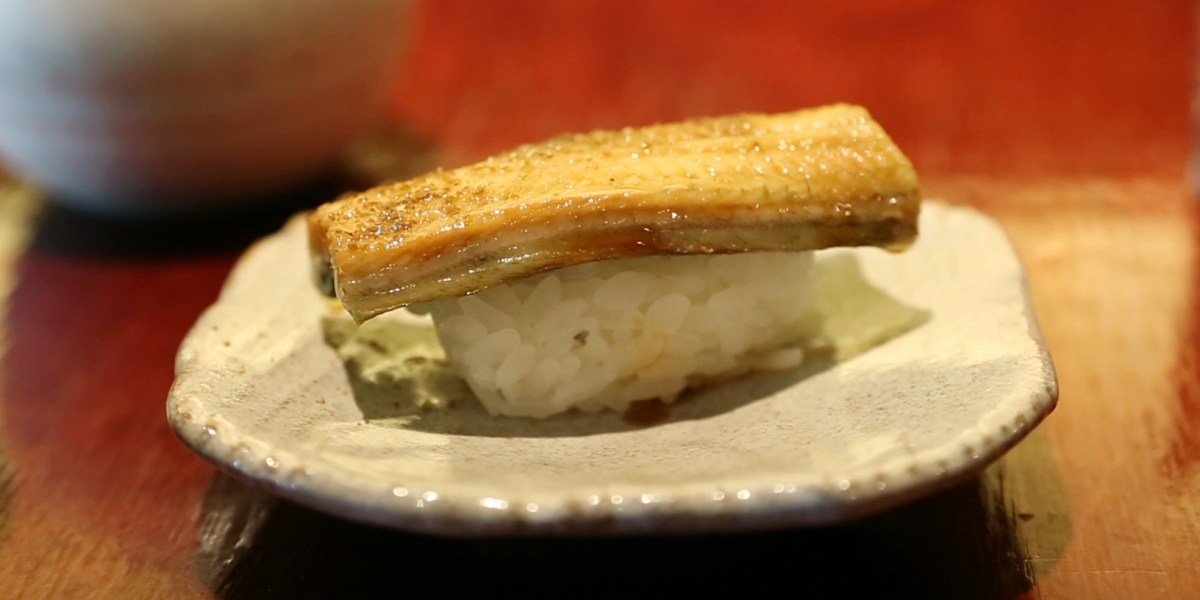
Anguilla eels, especially baby eels called elvers, are valuable because they are used as seed stock by Asian aquaculture companies that raise them to maturity for use as food. Freshwater eel is known as unagi in Japan, and it’s a key ingredient in numerous sushi dishes. Eel is also culturally significant in Japan, where people have eaten the fish for thousands of years.
The elvers have become more valuable in the U.S. over the last 15 years because of the steep decline of eels elsewhere in the world. While the population of American eels has fallen, the drop has not been as severe as Japanese and European eels. Attempts to list American eels under the Endangered Species Act in the U.S. have failed.
Maine is the only U.S. state with a significant fishery for the elvers, and it is heavily regulated. Maine’s baby eels were worth more than $1,200 per pound at the docks in 2024, and they were worth more than $2,000 per pound the year before that.
New protections were on the table
CITES, which is one of the world’s largest multinational wildlife agreements, extended protections to European eels in 2009. The organization considered adding more than a dozen more eel species, including the American and Japanese eels, to its list of protected species.
Adding the eels to the list would mean exporters would need a permit to ship them. Before the permit could be granted, a scientific authority in the home country would have to determine that the export would not be detrimental to the species’ survival and that the eels weren’t taken illegally under national wildlife laws. That is significant because poaching of eels is a major threat, and rare species are often illegally passed off as more common ones, CITES documents state.
Tightening trade rules “will encourage species-specific trade monitoring and controls and close loopholes that allow illegal trade to persist,” the documents state.
US, Japan pushed back at protections
Fishing groups are not the only organizations to resist expanding protections for eels, as regulatory groups in some countries have argued that national and regional laws are a better way to conserve eels.
Japan and China have both told CITES that they don’t support listing the eels. And in the U.S., the Atlantic States Marine Fisheries Commission, which regulates the American eel fishery, submitted testimony to CITES opposing the listing.
The U.S.’s own management of eels is sufficient to protect the species, said Toni Kerns, fisheries policy director with the commission.
“We don’t feel that the proposal provides enough information on how the black market would be curbed,” Kerns said. “We are very concerned about how it would potentially restrict trade in the United States.”
A coalition of industry groups in China, Japan, South Korea and Taiwan also submitted a request that the protection be rejected, saying CITES’ assertion that international trade is causing eel populations to decline is “not supported by sufficient evidence.”
Conservationists say the time to act is now
The strong demand for eels is a reason to protect the trade with new rules, said Nastya Timoshyna, office director for Europe with TRAFFIC, a U.K.-based nonprofit that fights wildlife trafficking.
Illegal shipping is not the only reason the eels are in decline, but working with industry to cut down illegal trade will give the fish a better chance at survival, Timoshyna said.
Eels might not be universally beloved, but they’re important in part because they’re an indicator species that helps scientists understand the health of the ecosystem around them, Timoshyna said.
“It’s not about banning it or stopping fishing practices,” Timoshyna said. “It’s about industry being responsible, and there is massive power in industry.”
___
Associated Press writer Michael Casey in Boston contributed to this report.
