

In This Article
This article is presented by Onshore.
A situation that often catches new real estate investors off guard is a significant discrepancy in return on investment (ROI) between what seem like two identical properties.
The scenario typically goes like this: The investor did all the necessary research and purchased, for example, a unit in a multifamily development. The investment starts generating returns; the investor is then in a position to expand their portfolio and invest in another unit in the same development or a comparable unit in the same area: same purchase price, same rent. And yet the outcome is totally different; the second property isn’t generating the same returns.
Where did the investor go wrong? The answer is that they didn’t pay enough attention to how the second property was different from the first in terms of financial structuring. Just because two properties physically look the same/similar enough doesn’t mean they’ll be treated the same way financially for loan or tax purposes.
While researching the potential of a specific property should always be a priority, you’re not off the hook the second time around just because you “already have one just like this.” As we’ll see, differences in anything from the timing of your financing to individual tax treatment can impact your ROIs.
You have to pay attention to these two details every time you buy an investment property—the potential differences can be surprisingly drastic.
1. Differences in Financing
This is the most obvious difference that can create a difference in how two properties are performing.
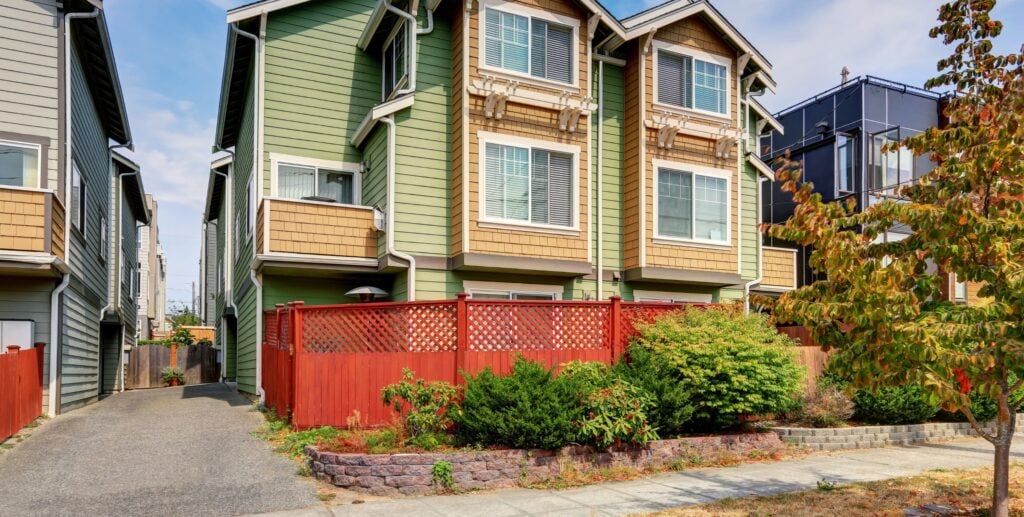
Say you bought a condo in 2021, and then you bought a second, identical-looking condo across the street in 2022. Even though the properties are the same, you wouldn’t have gotten the same financing on the 2022 condo because the borrowing landscape had changed out of recognition.
Your loan costs will be higher, which will eat into your ROIs. Just the mortgage rate alone would’ve made a massive difference: an average of 5.53% in 2022, as opposed to the very modest 3.15% back in 2021.
Rising property insurance costs can also hugely affect how your property performs overall. The average monthly property insurance cost increased from $39 per unit in 2019 to $68 per unit in 2024 in real terms, a staggering increase of 75%. Passing down this cost to tenants through rent increases isn’t always an option—especially when prospective tenants can clearly see cheaper options in the same area or building (including likely your own same-but-different rental).
Remember: Rent is not your only concern; you have to factor in all operating costs, including loan and insurance costs.
2. Depreciation Discrepancies
The second factor that can create significant ROI shifts is a difference in tax outcomes. Specifically, depreciation and cost segregation treatment for two seemingly identical properties can be vastly different.
It can seem like depreciation is a “safe” tax-offsetting strategy, but it isn’t guaranteed and can be significantly altered by a property’s individual history. Be very careful: If you were hoping to boost your cash flow through depreciation and cost segregation, you need to know everything about your new property, even if it seems the same/similar to your last one.
Among many other things, details like the exact property type, date of construction, past renovations, and differences in the layout and fittings, including plumbing, can shift what can be depreciated in the current property. Did one property have the flooring replaced with a different material, while the other one didn’t? Even that can shift your ROI outcomes.
Unless you are buying two new builds constructed at the exact same time, to the same spec, you simply cannot assume that two investment properties with the same price will have the same tax outcomes.
Here’s a quick real-life example: Two properties are available for purchase in the same area, both priced at around $500k. One is a single-family unit, while the other is a multifamily unit.
If the investor goes for the multifamily property, they will be able to claim $20,000 to $50,000 more in depreciation in the first year. The reason? The multifamily unit has a shared parking lot, outdoor space, and a laundry room. These are all five- or 15-year depreciable assets; the single-family home, which is otherwise very similar, does not have them.
The Importance of Running Cost Segregation Comparisons
You might also like
You should always run cost segregation comparisons before you close that deal. If you’re hesitating between two properties, that is the one thing you are likely forgetting about, but it could make a significant (not marginal) difference to your ROI.
The truth is that many beginner investors do not do cost segregation studies because they are complex and daunting. Many don’t quite understand how they work and so do not factor them into their purchasing decisions. Or they just do a generic study or look up averages for how much depreciation can save you, which later turns out to be the wrong figure for the actual property purchased.
Instead of relying on generic assumptions or ignoring depreciation potential altogether, you can use Onshore’s cost segregation calculator as a way to model how your property will perform. It’s a free service, and it doesn’t require you to do the analysis yourself—you just upload relevant documents, and a detailed analysis is performed for you.
Final Thoughts
It may feel counterintuitive, but assuming that two properties that look identical and cost about the same will produce similar ROIs is likely a mistake. Buying a property on the assumption that it will perform the same way your previous, similar investment did is also not a reliable strategy.
Don’t miss out on a potentially more lucrative deal: Always perform a segregation comparison before you make your decision.
