

The government’s long-delayed November inflation report appeared, at first glance, to deliver welcome news: Consumer prices rose only 2.7% from a year earlier, while core inflation cooled to 2.6%, the lowest reading in years. But for many economists, the numbers immediately raised red flags, especially on housing, the single largest component of inflation.
“This is a wacky number,” Diane Swonk, chief economist at KPMG, told Fortune. “Shelter costs basically flatlined October by carrying forward September. When housing is that large a component, that really matters.”
The culprit, several economists say, is the extended government shutdown, which disrupted the Bureau of Labor Statistics’ ability to collect price data throughout October and into November. When data collection resumed in mid-November, the agency was unable to retroactively gather missing information. Instead, it relied on statistical assumptions—often “carrying forward” previous prices—that effectively treated some categories as if inflation had stopped altogether.
Housing appears to be the most distorted category. Shelter accounts for more than 40% of core CPI, yet the November report implies rents and owners’ equivalent rent was essentially zero in October.
“We expected it to cool,” Swonk said, “For this low level, it seems a little bit too much.”
She warned those assumptions don’t simply affect one month’s data. “Because of the assumptions that were made in October, it literally anchors the index going forward,” she said. “It lingers.”
Other quirks in the report reinforced that sense of unreliability. Gasoline prices, which Swonk said declined during last month’s period, instead showed an increase on a seasonally adjusted basis. Daycare costs—long one of the fastest-rising components of services inflation—suddenly fell.
Joseph Brusuelas, chief economist at RSM, wrote in a blog post the November CPI should be treated with exceptional caution.
“This was one flawed CPI report,” he wrote. “The November consumer price index report is full of noise and lacks the normal breadth and depth that the good folks over at the Bureau of Labor Statistics normally provide.”
Because the agency couldn’t collect October prices, Brusuelas said it is nearly impossible to pinpoint why inflation appears to have slowed.
“A quotient of humility is in order here,” he added. “Because of the flawed report, it is better to state forthrightly that we do not have sufficient sense of price movements over the past two months.”
Markets seemed to agree. Normally, market watchers would expect a meaningful drop in inflation would spark a sharp rally in stocks—or, in these days of bad data being good and good data being bad—a selloff as markets reprice interest-rate expectations. Instead, the reaction was muted. Stocks edged higher, and futures markets barely shifted, perhaps an indication the skepticism of the report was widespread.
On the surface, the data supports the Federal Reserve’s recent decision to cut interest rates and strengthens the case for another cut early next year. But both Swonk and Brusuelas cautioned against drawing policy conclusions from distorted numbers.
“The Fed will take this with a grain of salt too,” Swonk said, noting policymakers were similarly cautious with labor-market data affected by the shutdown. “The Fed isn’t oblivious to this. What’s hard is that we have less real-time information on inflation than we do on the labor market.”
That challenge is especially acute in housing, where affordability remains a crisis, despite signs of cooling inflation. Swonk emphasized inflation and affordability are not the same thing. Home prices may be flattening in some markets, but mortgage rates, insurance premiums, and utility costs continue to strain households, she said. Electricity and natural-gas prices, long dormant, are rising again, partly due to stresses on energy grids tied to data-center expansion, she said.
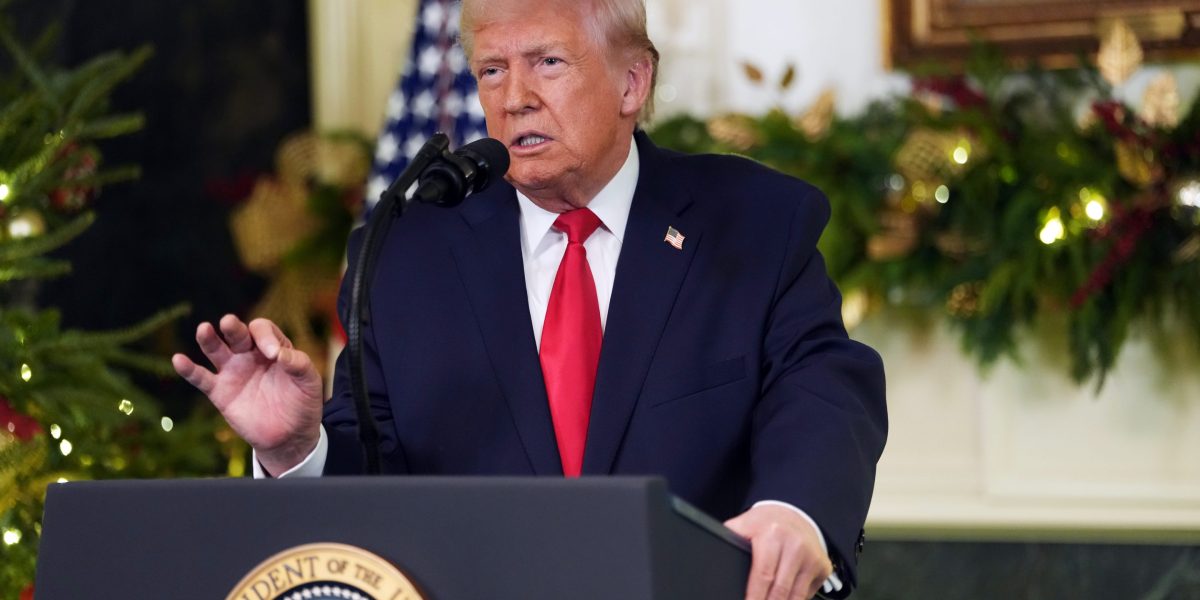
President Donald Trump said in an address to the nation Wednesday evening he would soon announce “aggressive housing reforms,” and touted his upcoming pick to replace Jerome Powell as Federal Reserve chair for someone more doveish.
Brusuelas said the broader takeaway is inflation right now is a wash as opposed to a victory.
“Noise rather than signal is the major takeaway from the November CPI report,” he said.
Or, as Swonk put it: “We knew to take the data with a grain of salt. This one, we might need more than a few grains of salt.”
