

Felipe W., a 20-something Yelp Elite reviewer in Dallas, put it bluntly when describing what he looks for before spending money at a new restaurant.
“In reviews, I want things that you can’t quantify so easily from the website or before you walk in. What makes it different than other places? What’s their business model like? Am I paying for the vibes?”
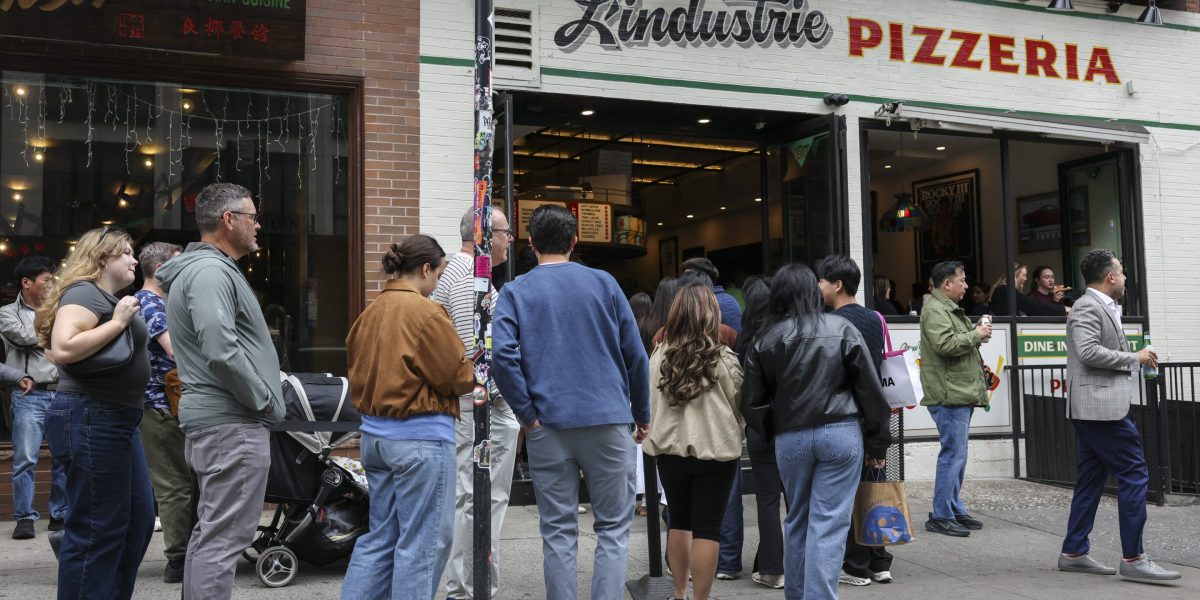
It’s a question that cuts to the center of a contradiction defining an entire generation’s economic behavior. Gen Z has built a reputation as anti-capitalist in spirit — skeptical of corporations, vocal about inequality, allergic to anything that feels like a corporate cash grab. And yet this is also the generation that will wait an hour in a TikTok-viral line for a bagel, a matcha, or a $9 pastry, driven by hashtags like #TikTokMadeMeBuyIt, which has racked up billions of views. New research from Yelp, conducted in partnership with Angus Reid Group, suggests the resolution to that contradiction isn’t ideological at all. It’s about trust.
New research from Yelp, conducted in partnership with Angus Reid Group, suggests the resolution to that contradiction isn’t ideological at all and Gen Z doesn’t hate capitalism as much as it says it does. It’s about value for money.
The myth of the impulsive spender
Gen Z has a reputation for spontaneous, hype-driven spending, but survey data tells a more complicated story. The research, based on a survey of 1,323 Americans ages 18 to 29 fielded by Angus Reid Group from Feb. 2 to 19, 2026, found that across every category tested, an overwhelming majority of Gen Z researches purchases on at least one platform before buying: 97% for restaurants, 94% for beauty, 93% for fitness and wellness, 92% for home services, and 84% for professional services.
That doesn’t mean Gen Z isn’t spending. Food remains the top outlet: 78% of respondents said they’d bought takeout or delivery in the past month, and 72% had dined out in person, with both categories up 45% year over year.
When a little extra cash lands in their pocket from a bonus or a gift, 74% said they’d put it toward dining out and 70% toward takeout. The picture isn’t a generation retreating from consumption. It’s one that consumes constantly while auditing every purchase along the way, a pattern PwC’s consumer research has called the “Gen Z paradox” — spending less overall while expecting more from every dollar spent.
Written reviews over influencers
That auditing instinct shows up most clearly in how Gen Z weighs sources. The survey found Gen Z trusts detailed written reviews over influencer recommendations by wide margins — 78% to 59% for dining out, and 81% to 61% when picking a service professional like a hairstylist or a contractor. Beyond that, 77% of respondents said they trust platforms with detailed written reviews over those offering only star ratings when researching services, and 76% said the same for restaurants.
The skepticism toward influencers tracks with a broader ambivalence researchers have identified. Gen Z has learned to discount recommendations that may be compensated, evidence that it wants authentic, human-generated content rather than paid endorsements.
Miranda M., a Yelp Elite user in Brooklyn, explained why detail matters more than a rating: “I feel like people tend to explain more on Yelp. On Google, it’ll show when someone leaves a five star rating and like there’ll be no detail. I want to see words or pictures and more about the experience, not necessarily just individuals and their ratings.”
Angelina E., a Yelp Elite user in Orlando, put it similarly: “I like the honest reviews. I want to hear… how long did you have to wait for something? Did you go back to this place again? Was this service the best service you ever had?”
Price, inflation, and the ambiance tax
Money still talks. When choosing a new restaurant, menu (89%) and price (87%) were the two most influential factors in the survey, ahead of ambiance, which 73% of respondents still called influential. When it comes to service professionals like hairstylists, pet groomers, contractors, 85% said price mattered, with up-to-date business information (81%) and ease of booking (80%) close behind.
That’s where Felipe’s “vibes” question becomes more than a throwaway line. Ambiance ranks below price and menu, but it’s still influential for roughly three in four Gen Z diners — suggesting they’re not purely bargain-hunting, but weighing whether the intangible parts of an experience justify the bill. This lines up with what the BBC has documented as Gen Z being the only generation to rank quality above price, while also being more likely than older cohorts to read — and leave — detailed reviews.
Miranda M. described exactly this kind of price-vetting ritual: “A lot of hole-in-the-wall restaurants don’t have a website that has a menu. So I’ll go to Yelp and look into the photos; sometimes people will post a menu and that gives me a good idea. I’ll send it to my friend group and say, ‘Does this price point meet everyone’s expectations?’”
The TikTok paradox
None of this erases the line-waiting, hype-chasing side of Gen Z consumption. TikTok remains a powerful discovery engine for younger consumers, and the platform has leaned into that role, recently adding restaurant review features that let users tag a business and leave a star rating directly in-app — a direct challenge to Yelp’s core function. But the Yelp data suggests TikTok and Yelp aren’t competing for the same job. They’re doing two different things.
It appears that TikTok supplies the spectacle and the social signal, the reason to want to go somewhere at all, while Yelp supplies the verification layer once curiosity has been sparked. Industry analysts tracking TikTok’s evolution describe this same shift, characterizing the platform increasingly as a “discovery engine” for younger consumers rather than a final decision-making tool.
Quynh-Nhi N., a Yelp Elite user in Dallas, described this split screen directly: “I use TikTok just to watch the video, but I go over to Yelp to see a little bit more detail on what everyone else is saying about the new places.”
Gen Z doesn’t trust AI, either
The same instinct for verification shows up in how Gen Z treats artificial intelligence. Despite constant AI usage, trust remains thin: just 48% of respondents believe AI-generated summaries are accurate for service professionals, and only 43% say the same for restaurants. Yelp ties this to earlier research conducted with Morning Consult, which found Gen Z is the generation most likely to demand “proof of trusted sources” when using AI search tools.
That skepticism appears to be intensifying, not fading. Gallup polling found Gen Z’s anger toward AI rose from 22% to 31% over the past year, even as regular usage held roughly steady around half of the cohort, meaning a generation that keeps using a tool it’s increasingly frustrated with.
Yelp’s own trend research has quantified the same anxiety in commercial terms: 72% of Gen Z say AI search platforms should provide more proof of trusted sources before they’ll rely on the results.
Not anti-capitalist. Anti-getting-played.
Taken together, the data points to a generation whose consumer behavior is less about resisting capitalism than about refusing to be a mark within it.
Gen Z spends aggressively on food, beauty, and services; follows viral trends into hourlong lines; and uses TikTok and AI tools constantly. What they withhold isn’t money — it’s blind trust. Every dollar requires validation, whether that comes from a 500-word Yelp review, a friend’s group chat, or their own eyes once they’ve walked through the door.
Felipe’s question lingers because it’s not rhetorical. It’s the actual due diligence Gen Z runs before every purchase: not “should I spend this?” but “am I getting what I’m paying for?”
As Yelp’s methodology notes, the underlying survey drew from a weighted sample of 1,232 respondents ages 18 to 29, rim-weighted by region, generation, and gender — a reminder that this isn’t anecdote, but a measurable pattern across a generation approaching $12 trillion in projected spending power by 2030.
For this story, Fortune journalists used generative AI as a research tool. An editor verified the accuracy of the information before publishing.
