

In This Article
There’s no need to read the tea leaves to try and guess where to invest next—just follow the money. In this case, the money is the hundreds of millions of dollars being spent by major builders planning large swathes of single-family homes and rental communities across the country.
Smaller mom-and-pop investors, paying attention to planned new communities, have the opportunity to benefit from extensive market research, glide in on the slipstream of corporate juggernauts, and eke out lucrative long-term investment strategies.
The Signals Telegraphed by Big Builders
The top 10 builders aren’t in the gambling business. When they decide to build hundreds of new homes, vast troves of data are analyzed to assess metrics such as household growth, job access, and renter demand to assure stakeholders that their money is well spent.
With the nation facing a 10 million-home deficit, according to White House economists, major developers have been calculating where they believe new housing is most needed. The South and the Midwest appear to be where the action is.
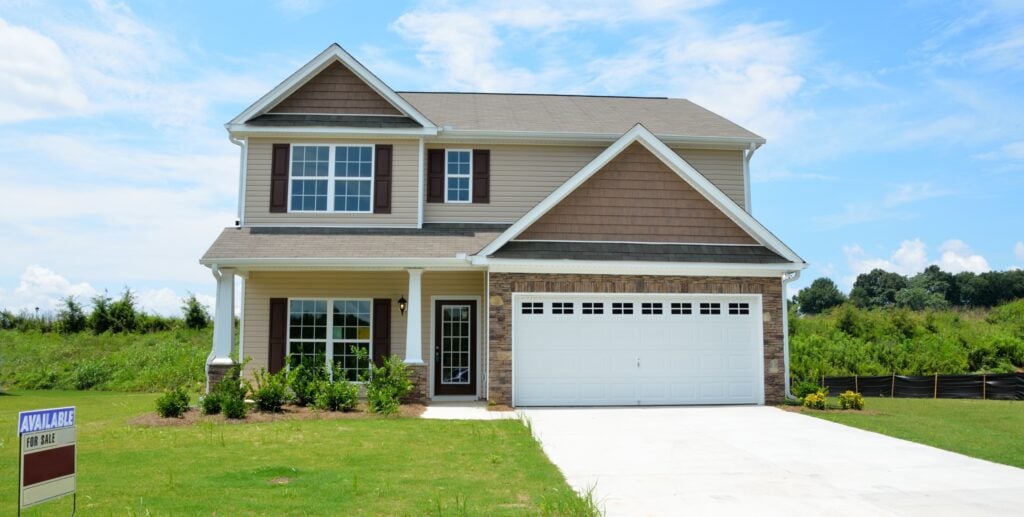
Century Communities, the nation’s 10th largest homebuilder, recently announced more than 360 new single-family homes across three developments in the Atlanta metro—Belleview Manor in Fairburn, Hawthorne Reserve in Dallas, and Windsong Estates in McDonough—with prices generally starting in the low-to-mid $400,000s and low $500,000s.
“Growth in outer-ring Atlanta suburbs … is being fueled by a mix of in-migration, steady job access across the metro, and a value proposition that still works for many households: more space, newer product, and neighborhood amenities at price points that remain below many closer-in submarkets,” John Gillem, a senior director of market analytics for Homes.com, said on the company site.
How Smaller Investors Can Take Advantage
For a small investor, those metrics offer an appealing insight because, given current interest rates and housing prices, many would-be homebuyers could still be left on the sidelines despite moving to these areas for employment and education.
Therefore, for potential buyers, the game plan is to rent and save while ensuring their children are placed in good school districts—an ideal scenario for landlords seeking stability, long-term tenants, and appreciating assets in growth corridors.
The ever-expanding Houston suburbs are another place where investors will find plenty of tenant interest. Here, The Signorelli Company has broken ground on 359 residences in the Azalea District, the final residential phase of the 1,400-acre Valley Ranch master-planned community in Montgomery County, Texas. Homes start in the $300,000s in a submarket where the median sales price in New Caney over the past year was about $272,990, up 9% year over year, according to Homes.com data.
Suburban Rentals and New Zoning Are Fueling Apartment Growth
Suburban rentals are a hot commodity following a broader trend of renters shifting from central cities to surrounding communities in search of more space and affordability.
Minneapolis became the first U.S. city to eliminate single-family zoning through its Minneapolis 2040 Plan, which has led to high levels of activity, stabilized rent growth, and a continued focus on increasing supply. ADUs have also been part of the housing reform package that has seen hundreds of new apartment buildings rise.
According to research by commercial brokerage Marcus & Millichap, reported by REJournals last year, development had been robust, specifically in Minneapolis suburban markets, resulting in 8,000 units in 2024 and 3,500 in 2025.
As a result, these areas experienced strong rent growth and declining vacancies, reflecting renters’ preferences for quiet, more spacious environments, a solid job market, and new housing supply. Greystar’s recent purchase of a 264-unit property in Maple Grove and the 180-unit Lyra at Riverdale Station in Coon Rapids by MLG, as reported by CoStar, underscores confidence in the Minneapolis submarkets.
The Bigger Picture
For a 30,000-foot overview of new single-family housing development in the U.S., the 2026 Census.gov website provides a detailed snapshot, while Homes.com has released a sample of the nationwide projects that investors could use as a guideline.
Property management software company TurboTenant echoed the sentiments of large developers, as outlined in their newest projects: The best places to buy rental properties are states that favor low state income tax and a high quality of life, notably the Sunbelt.
Other strong investment areas are those with strong housing economies and high housing demand, such as Florida in the Southeast. The Midwest can’t be discounted either, due to its low prices, high yields, and market stability, which translates to cash flow.
You might also like
Using these metrics, here are 11 rock-solid places to invest:
Austin, Texas
Phoenix, Arizona,
Raleigh, North Carolina
Charlotte, North Carolina
Boise, Idaho
Nashville, Tennessee
Salt Lake City, Utah
Tampa, Florida
Indianapolis, Indiana
Columbus, Ohio
Atlanta, Georgia
RentCafe/Yardi Matrix shares a similarly positive Midwest outlook for investors, naming Cincinnati as the top apartment market to watch, with Minneapolis, Cleveland, and Kansas City also in the top 10.
Interestingly, the report notes that a “boomerang migration” pattern is reinforcing Midwest demand. Roughly a quarter to a third of people who left their Midwest home regions eventually return, usually to larger metros such as Detroit, Cleveland, Cincinnati, and Kansas City. In these places, apartments rent for far less than they do in Southern metros, drawing investors seeking stability rather than rapid appreciation.
Indeed, according to late-2025 Bank of America data, Columbus and Indianapolis are cited as the two fastest-growing Midwestern MSAs in the country and are home to poster children for the new Midwest boom.
Final Thoughts: Strategies for Investing In or Around New Single-Family Residential Developments
A new development offers investment opportunities both within the new community and outside of it. Here are three of the least risky ways to play it.
1. Buy inside the subdivision (early-phase entry)
Negotiate with the builder to be one of the first buyers in a new community, giving you the chance to secure the biggest discounts as the project builds momentum. Later phases will be sold at higher prices, thereby lifting the value of yours. Obtaining a premium lot (on a cul-de-sac, backing onto green space) will allow you to “sell on” quickly once the development starts to fill up.
You will have to pay the mortgage during this process, and, inevitably, new owners don’t want a house that has already been lived in. Moving in and keeping it immaculate, if you wish to flip it, could be a challenge.
The alternative is to live in the property for two of the five years and then sell without incurring capital gains tax. Rinse and repeat.
2. Buy the model home
This will be the first home built in the development, and in a prime location, so you’ll be able to negotiate a great price with the understanding that you probably won’t take possession until the development is completed, which could be a year or two down the line, by which time the price would have increased.
The good thing about this scenario is that the developers will keep the model home in spotless condition while it is on display, with regular touch-ups. Once you take possession, they are likely to include all the furnishings, too—after which you could move in yourself, rent it out, or sell.
3. Acquire older properties just outside the development
Buying in a new development means paying a premium. However, buying an older home just outside the development, which you can then fix up, lets you benefit from the prestige of being nearby (a good school district, high property values, retail, and other amenities). These properties can either be flipped or rented out at premium prices.
