

U.S. petroleum exports are rising to record highs amid the Iran war, and now a little-known developer will build a large oil-shipping hub deep in the middle of the Gulf of Mexico—but only with funding from the Trump administration and Japan.
The unusual government investment for Sentinel Midstream’s multibillion-dollar Texas GulfLink deepwater terminal is a bet on expanding U.S. energy infrastructure—and keeping Japan supplied with oil—at a time when U.S. energy developers are unwilling to take on the financial risks without long-term commercial contracts in hand.
The U.S. Commerce Department said the Japan-U.S. strategic Investment agreement will provide an estimated $2.1 billion to the project—the details are undisclosed—which was the originally announced cost of Texas GulfLink. Commerce Secretary Howard Lutnick said in a statement that the project will “reinforce America’s position as the world’s leading energy supplier.”
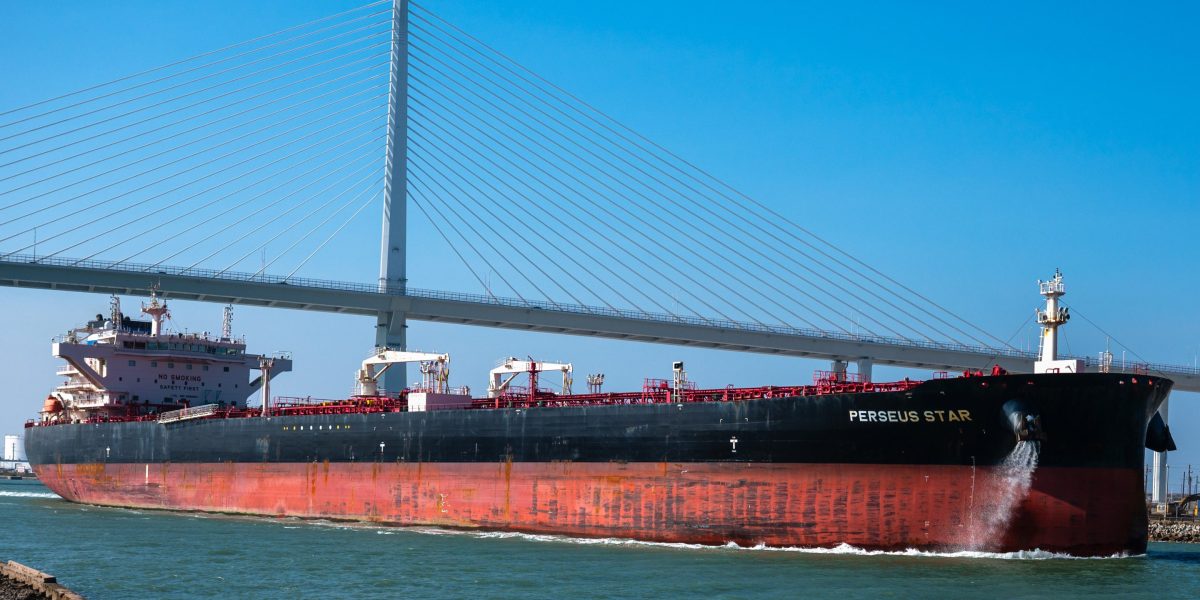
A long line of the largest oil tankers (very large crude carriers, or VLCCs) trekked to the Texas Gulf Coast beginning in April because of the lack of supplies from the Middle East. But the massive tankers, which can each hold 2 million barrels of oil, can only partially fill up at Texas ports because of the shallower depths. They must be topped off in the Gulf of Mexico via smaller tankers—a more time-consuming, expensive, and environmentally risky process.
Keland Rumsey, crude team lead analyst for East Daley Analytics, told Fortune that he believes the Iran war is helping the joint governments expedite the project, even if it won’t be completed until late 2028. The world will see the U.S. as a more secure source of oil in the future, he said.
“I do think there’s going to be a shifting of how people view the Middle East as far as a reliable source of energy,” Rumsey said. “That is one of the biggest drivers for why this is being pushed to get built.”
Sentinel is a private Dallas company backed by Cresta Fund Management. Sentinel CEO Jeff Ballard declined an interview request, but said in a statement, “This project creates a direct path from one of the most liquid crude hubs in the world to global markets, strengthening our allies, improving trade dynamics, and reinforcing the United States as the supplier of choice in an increasingly uncertain energy landscape.”
Ballard, who said the deal is not a direct government acquisition, added that Sentinel is “proud to be a trusted partner of both the U.S. and Japan governments and help lead the next chapter of American oil exports.”
Long time coming
The effort to build a deepwater, oil-exporting hub in the Gulf is a nearly decade-long effort that was originally a race among some of the country’s top pipeline developers. But that race essentially stalled during the pandemic when demand temporarily plunged and the Port of Corpus Christi continued to expand as the dominant oil-shipping player.
For years, Sentinel’s Texas GulfLink project was considered an overlooked dark horse in the hunt. But now, thanks to government funding, it looks to become the sole winner.
“They’ve been having the hardest time finding that commercial backing and justification to actually build the offshore oil port,” Rumsey said. “So, the difference between those projects and the Sentinel project is having the Japanese funding backing it.”
Construction on Texas GulfLink is expected to begin imminently. The terminal will be built about 30 miles offshore of the Texas coast. The hub will be moored in place and connected onshore via a long oil pipeline originating in tiny Jones Creek, Texas—nearly 60 miles south of Houston.
The U.S. produces more than 13 million barrels of crude oil daily—easily the world’s leader—and exports close to 4 million of those barrels per day. However, during the war in the Middle East, those exports have grown closer to 6 million barrels daily, driven largely by the release of barrels from the U.S. Strategic Petroleum Reserve.
The question is whether this increased demand will exist longer term via greater international reliance on U.S. supplies. And will the existence of Texas GulfLink trigger more U.S. oil production? If not, Texas GulfLink and the onshore Port of Corpus Christi and the Houston Ship Channel will just compete and cannibalize more of each other’s business.
After all, the only existing offshore exporting terminal, the Louisiana Offshore Oil Port (LOOP) only has minimal traffic. The difference is the 45-year-old LOOP, which was built to import oil and converted to exports in 2018, has a more remote location and limited access to the necessary crude oil pipelines.
Texas GulfLink wouldn’t have those same hindrances. But will the U.S. oil producers churn out enough volumes of oil to justify its construction?
“They don’t want to just drill, drill, drill if the [oil] price is going to crash after the war,” Rumsey said. “That’s the risk.”
