




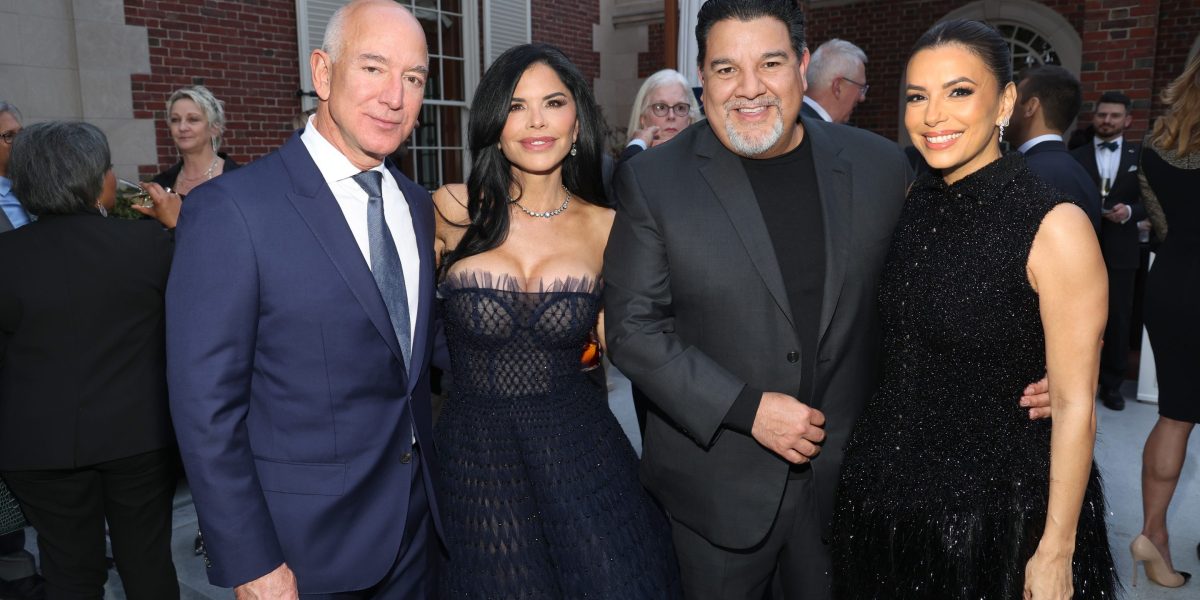
A lot of people talk about changing the world. But Amazon’s billionaire founder, Jeff Bezos, gave Eva Longoria $50 million to actually do it. And two years on, she says the biggest myth still surrounding philanthropy is that you have to be rich to do it.
“One of the biggest misconceptions about philanthropy is that impact is tied to wealth or scale, when in reality, impact comes in many forms,” the Desperate Housewives star told Fortune. “What I’ve learned is that impact doesn’t come from how much money you have, it comes from how you show up.”
It’s a message that feels pointed at a moment when billionaire philanthropy dominates headlines and ordinary people assume giving back is someone else’s job.
For Longoria, the most powerful—and most overlooked—form of change happens at street level. “Mentoring someone, supporting small business, sharing what you know—those things matter because not everyone has access to capital or resources, but anyone can be part of someone else’s support system,” she adds. “And I think that’s really what’s missing for a lot of people — they don’t have someone in their corner.”
What Eva Longoria did with Jeff Bezos’s $50 million
The actress is practicing what she preaches. Having built a net worth north of $80 million thanks to a sprawling business portfolio—including a luxury tequila brand Casa Del Sol, the media company Hyphenate Media Group, a stake in women’s soccer team Angel City FC and an early investment in the multibillion-dollar John Wick franchise—now, she’s channeling paying it forward by mentoring small business owners through a new partnership with Lenovo.
She’s also been running the Eva Longoria Foundation since 2012 to improve educational and entrepreneurial opportunities for Latinas in the U.S., as well as Eva’s Heroes—a charity that helps young adults with “intellectual special needs,” according to its website.
Bezos and his wife, Lauren Sánchez, launched the Courage and Civility Award in 2021 for individuals who make significant contributions to society. They’re given millions (often $100 million) to help those in need. Previous recipients include CNN host and civil rights advocate Van Jones, chef and humanitarian José Andrés, and country legend Dolly Parton—who famously helped fund Moderna’s COVID-19 vaccine research.
It’s why Longoria says receiving the prize, alongside Bill McRaven, a retired Navy admiral, is much bigger than the money.
“Receiving that support was incredibly meaningful, not just because of the scale of the gift, but because it represented trust and responsibility,” Longoria said, adding that she’s be “more intentional and more strategic” in how she shows up as an advocate.
“This award has allowed me to continue investing those resources into the communities and causes I care deeply about—supporting Latina entrepreneurs, expanding access to education, and backing organizations that are driving real change on the ground,” she added. “The Courage and Civility Award makes it possible for us at the EvaLongoria Foundation to create long-term impact with transformative giving.”
McRaven, who oversaw the 2011 raid that killed al Qaeda leader Osama bin Laden, pledged to use his share of the money to develop education programs for future military leaders and the children of deceased veterans, as well as mental health support for those who serve.
You don’t have to be a billionaire to make a difference
Longoria isn’t the only one making the case that you don’t need to be rich and famous to make a difference.
Just look at The Giving Pledge—the commitment, co-founded by Bill Gates, Melinda French Gates and Warren Buffett, that asks the ultra-wealthy to donate at least 50% of their fortunes—has attracted more than 250 signatories since its launch in 2010.
The number who have actually followed through? A handful—less than 10. Most only fulfilled the pledge after their deaths.
It’s why Liz Baker, CEO of Greater Good Charities, says we “can’t afford” to wait on billionaires to solve the world’s problems. “I think if everybody did something to help in their community, we wouldn’t have the issues that we have.”
The global nonprofit she runs has distributed more than $1 billion in impact across 121 countries since 2006—and she also told Fortune that the idea that giving back has to be some grand, expensive gesture is one of the biggest things holding people back.
“Everybody can chip in—and it doesn’t even have to be money. Like, do something,” she said.
“Even if you’re like, I have one hour a week to solve this problem in my community that I care about,” Baker said. “Figure out how to do that. Most local nonprofits need help.”